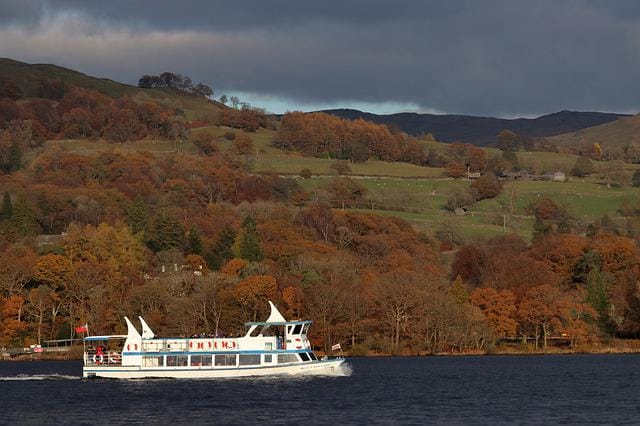
The Lake District takes its name from its water, and yet one of the first things to surprise newcomers is that, strictly speaking, only one of them is a “lake” at all. Bassenthwaite Lake holds that title alone. Every other great sheet of water is a “mere” or a “water”, names handed down by Norse and Anglo-Saxon settlers long before the region had its modern label. Whatever you call them, they are the heart of the place, and each has a character of its own. Here is a friendly tour of the best known, and what each one is good for.
Windermere, the grand old lake
If the Lakes have a capital, it is Windermere. At eleven miles it is the longest and largest lake in England, and the busy, cheerful hub around Bowness is where many first trips begin. This is the lake for a classic cruise, with passenger boats criss-crossing between Bowness, Ambleside and the southern shore all day, and for your first real sense of the scale of the place, with wooded islands, grand lakeside houses and the higher fells rising behind. It is also a playground for watersports, from paddleboards to sailing dinghies, and its shoreline is dotted with jetties and gardens. If you want bustle, boat trips and plenty to do even on a wet afternoon, Windermere delivers.
Ullswater, the dramatic one
Many seasoned visitors will tell you Ullswater is the most beautiful of all, and it is hard to argue on a still morning. The second largest lake at around seven and a half miles, it curves between steep fells in a way that reveals a fresh view at every bend. The much-loved Ullswater Steamers ply its length, and you can combine a sail with a walk by stepping off partway and returning on foot along the shore, passing the tumbling waterfalls of Aira Force on the way. For scenery that makes you stop and stare, Ullswater is the one.
Derwentwater, the Queen of the Lakes
Cradled by the town of Keswick in the north, Derwentwater has long been called the Queen of the Lakes, and it earns the name. Around three miles long and ringed by wooded shores and dramatic fells, with Catbells on one side and the bulk of Skiddaw behind, it makes a wonderful setting. Small launches hop between jetties around the shore, so you can island-hop, walk a section and sail back, or simply drift and take it all in. With Keswick on the doorstep, it is one of the easiest lakes to enjoy without a long drive to the water.
Coniston Water, the one with the history
Quieter than its larger neighbours, Coniston Water carries an outsized story. From its pier you can sail aboard the Steam Yacht Gondola, a beautifully restored Victorian steam launch now in the care of the National Trust, which has been carrying passengers on the lake for over a century and a half. Coniston is also bound up with the glamour and tragedy of the water speed record: it was here that Donald Campbell set record after record in his jet boat Bluebird, and here that he lost his life in 1967 chasing more than 300 miles per hour. With the great hump of the Old Man of Coniston rising above, it is a lake that rewards a slower, more reflective visit.
Wast Water, the wild one
For drama of an altogether different kind, make the longer journey west to Wast Water. This is the deepest lake in England, a dark, glacial trench hemmed in by towering screes that plunge straight into the water, and overlooked by Scafell Pike, the highest mountain in the land. It is remote, quiet and genuinely awe-inspiring, often named among Britain’s favourite views, and a world away from the bustle of Bowness. There is little here in the way of cafés and cruises, and that is precisely the point. Come to Wast Water for the raw grandeur of the place.
The smaller lakes, and a word on the water
Beyond the famous names lie dozens of smaller waters that reward the effort of seeking them out. Gentle Buttermere, with its almost level shoreline path, is a particular favourite for an easy half-day, while little Grasmere will forever be linked with the poet William Wordsworth, who lived and is buried nearby. Wherever you end up, a word on going in: the lakes are beautiful to swim in but can be deep and surprisingly cold even in high summer, with Wast Water the chilliest of the lot, so take care, ease in slowly, and keep an eye on children and dogs near the deeper edges.
Choosing your lake, and your base
The happy problem with the Lake District is that there are too many lovely lakes for one visit. Windermere and Derwentwater are the easiest to dip into, Ullswater the most dramatic, Coniston the most characterful and Wast Water the wildest, and a good trip might take in two or three. The simplest way to make the most of them is to stay close to the water you most want to see. Browse our places to stay and pick a holiday home beside your favourite lake, ready for cruises, shoreline strolls and slow evenings watching the light fade across the water.